
KOCHI MUZIRIS BIENNALE 2025-2026, curated by Nikhil Chopra with HH Art Spaces
For the time being
Act I
The sixth edition of the Kochi-Muziris Biennale was an invitation to embrace process as methodology and to place friendship as the very scaffolding of the exhibition.
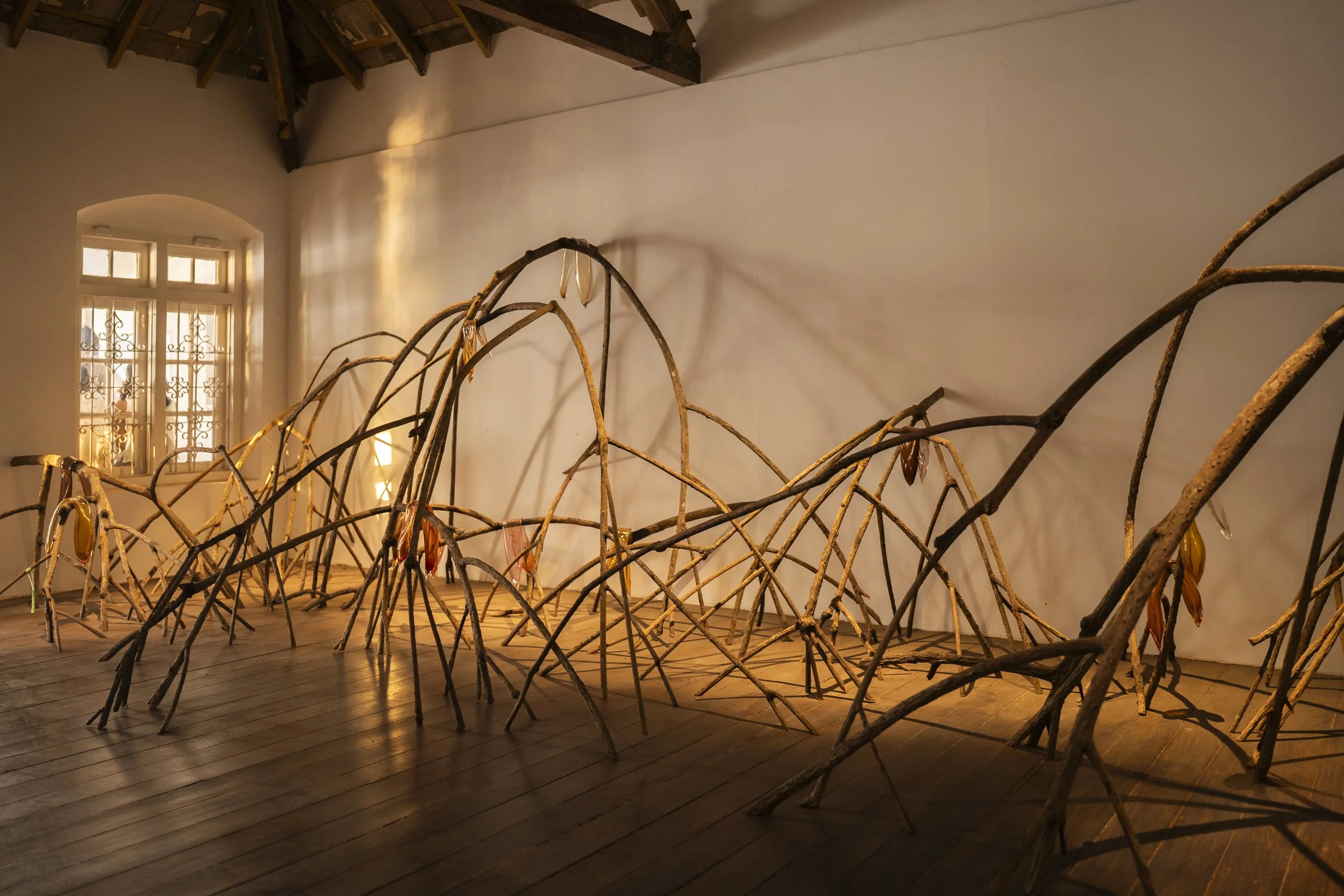
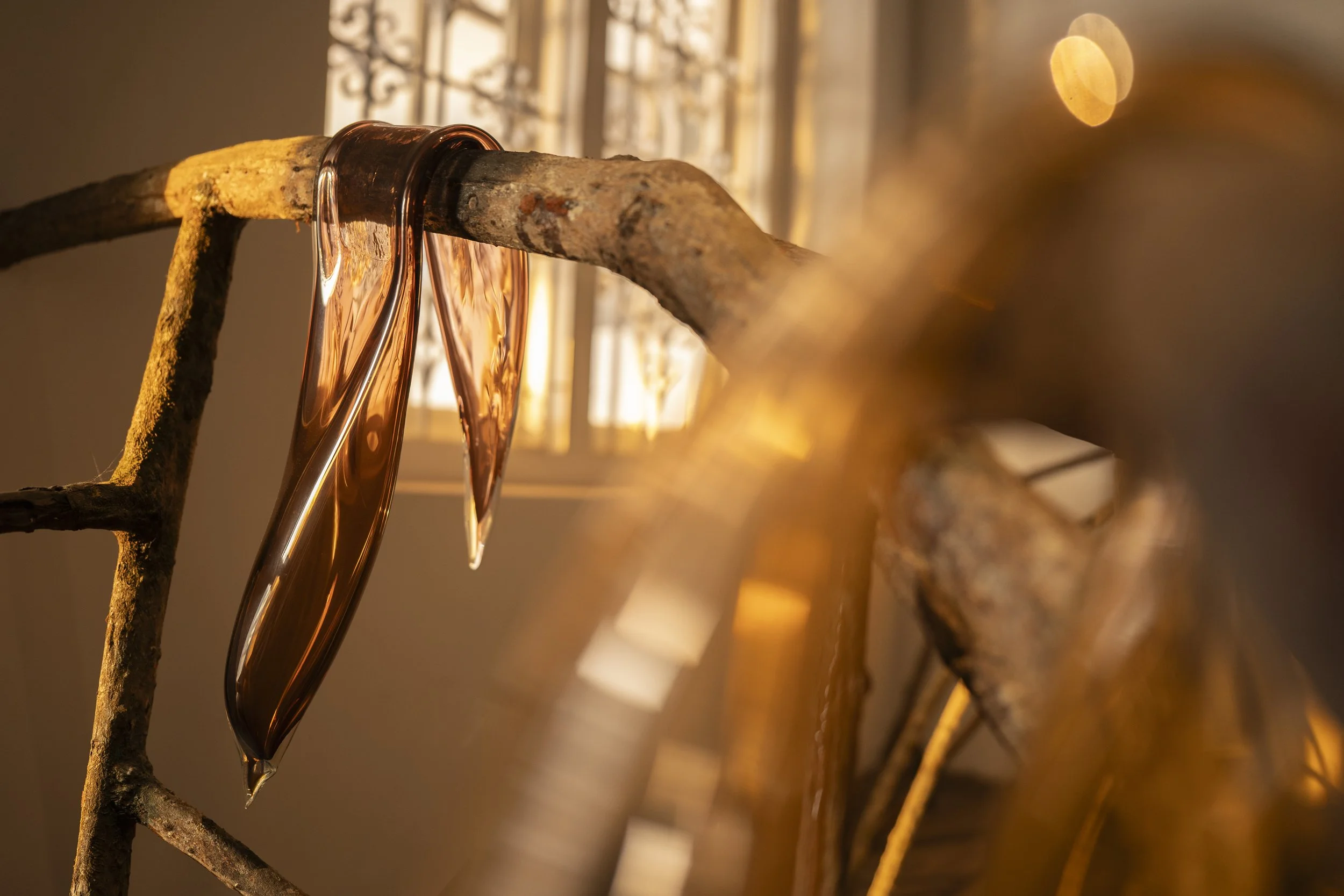
We imagined the Biennale as a living ecosystem where each element shared space, time, and resources, and grew in dialogue with each other. In Kochi, a historic port city where trade connected distant worlds, we began with our site and region to dialogue with ancient and emerging global perspectives. This immersion into the daily rhythms of Kochi allowed us to explore the idea of the unfinished spectacle and shape something that was evolving, responsive, and alive.
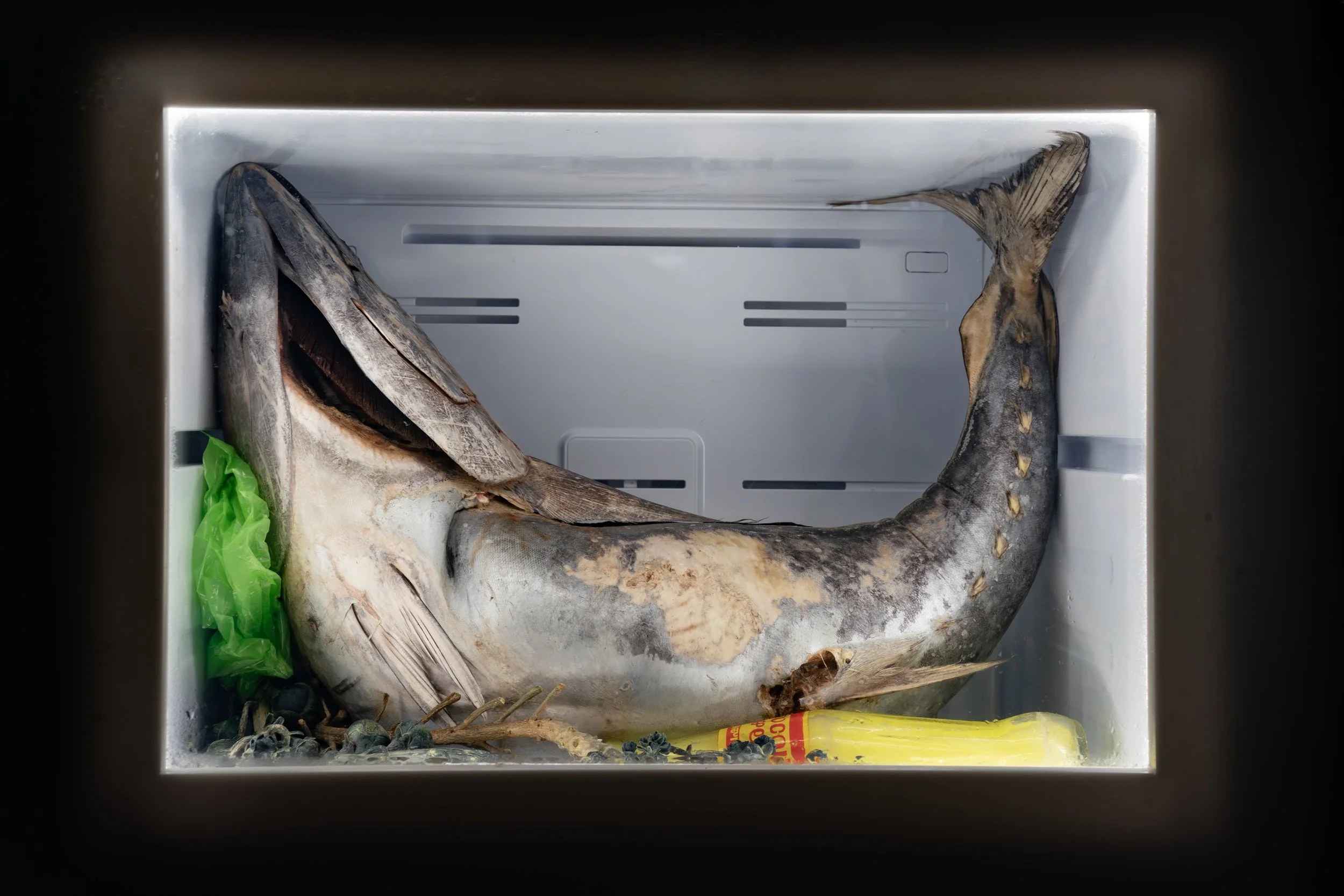
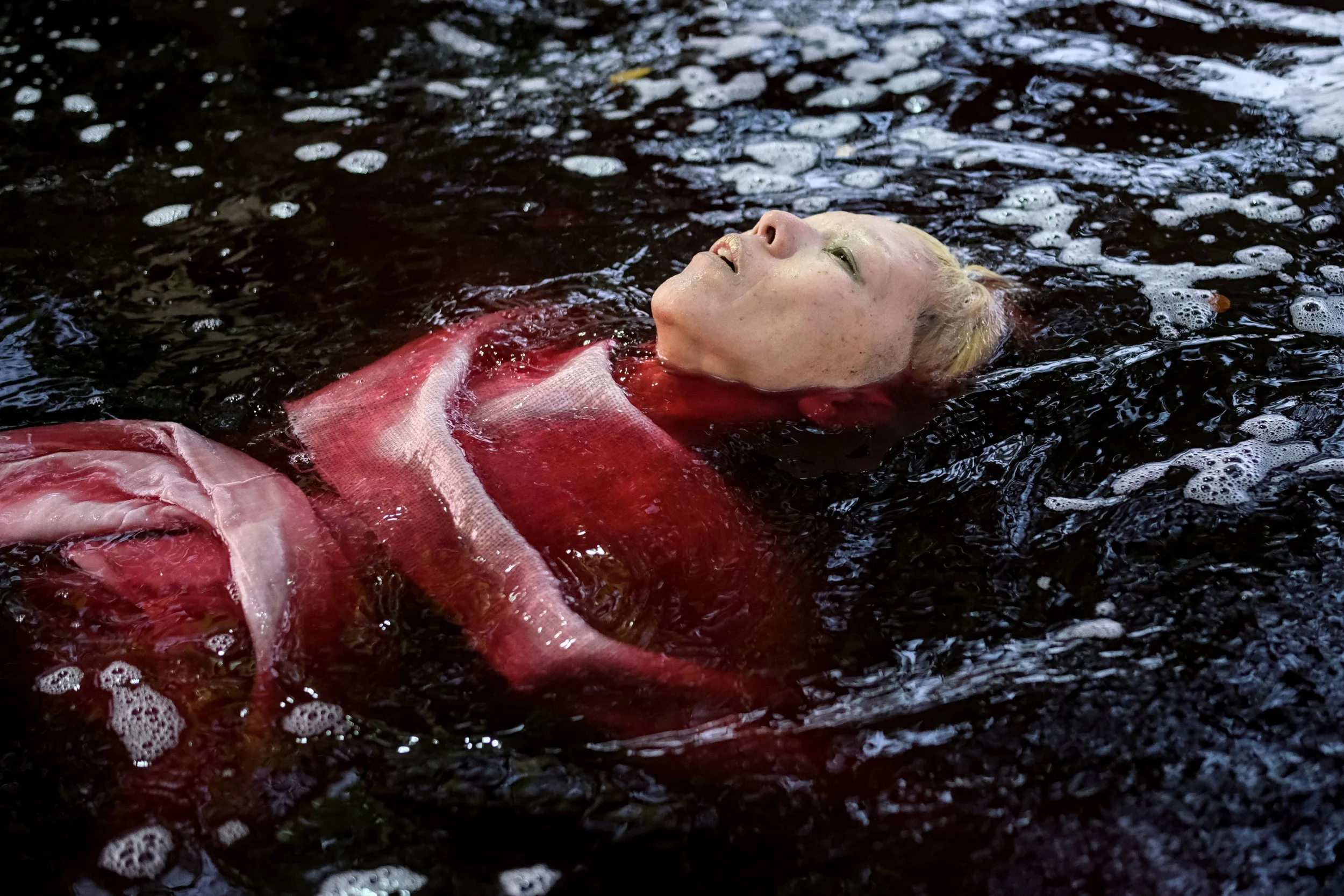
Our enquiry began with the body: chemical, tender and marked by memory and intimacy. Our bodies are not entirely ours; they are inherited, cultivated like landscapes by those who tend to it, with or without care. This edition of the Biennale was an invitation to think through the embodied histories of those who came before us and continue to live within us in the form of cells, stories, and techniques. We recognise that while art alone may not change the world, encounter can, at the very least, provoke dynamic conversations. In the aftermath of a global pandemic, we are more attuned to the space between us; between presence and absence.
We witnessed and received the flows of artistic labour in studios and the contributions of those practising outside of it. The city or the studio becomes a place of refuge and rebellion; to take dysfunction and turn it into function or vice versa, where presence translates into process and traces. Many forms of liveness—performances, actions, encounters, and conversations—activated the 110 days of the Biennale.
Act II
There is a play in this title, an open-ended feeling, like leaving something to rest, letting go and starting fresh, a form of re-organising; for each of us individually, a collective of artists, and for the Kochi-Muziris Biennale itself. Having said so, it is also a time of action and organisation in current global conditions, where an ethical and humanitarian crisis is ongoing and escalated during the planning of this exhibition.
A sense of awareness that runs through this syncretic exercise of building a biennale is the movement from I to us. The biennale, in its very essence, is a punctuation in a landscape where art is both a space and a practice. Hence, the idea of what a biennale should be—or for it to immediately be identified as an exhibition—is its limitation and its possibility. We see the Kochi-Muziris Biennale as a gathering that is suspended in time. The scale of the exhibition made us ponder what effort, toil, and work are. The Biennale revealed to us that we don’t have to adhere to permanence—our role as actors in the cosmic calendar is always for the time being.
The title drew emphasis to inviting audiences to stay and linger a little longer, to be present, and to be in the midst of many conversations between artworks and our world in its many forms. The artists’ investigative processes, formal studies, personal journeys, archival narratives, and anthropologies were decisive and in all cases, transformative. They were political and acknowledged the privilege that artists have with their visual, sonic, and performative or literary practices—a language coded with ancient and indigenous wisdoms and inheritances, while also always determined by the language of protest, action, resistance, and survival.
Creating the infrastructure to hold a large exhibition and bringing artists and audiences together to participate in the process—and in the possibility of making and dismantling—comes from the awareness of marking together another palpable layer to the narratives of migration and dislocation that are embedded in the walls of the various warehouses.
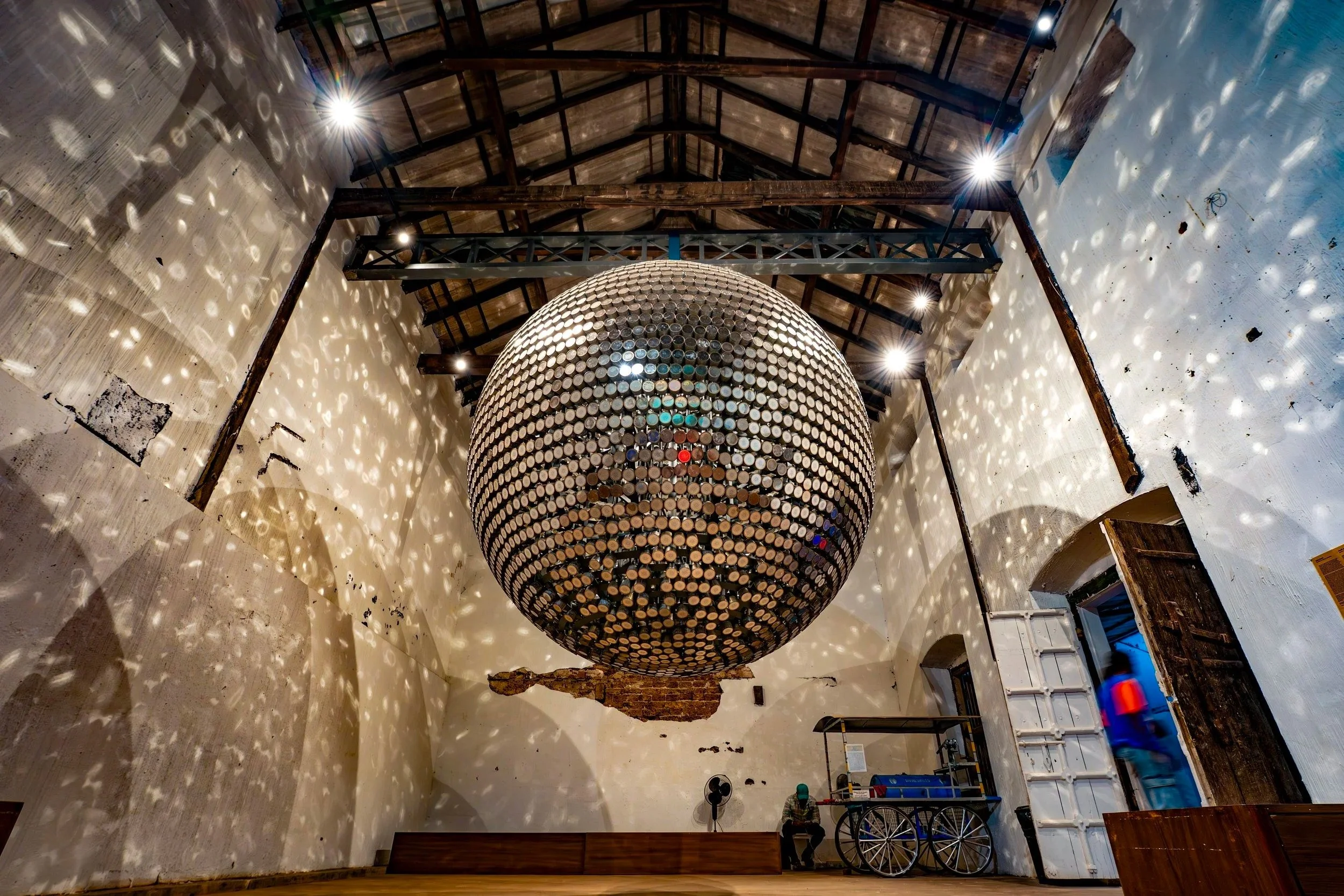
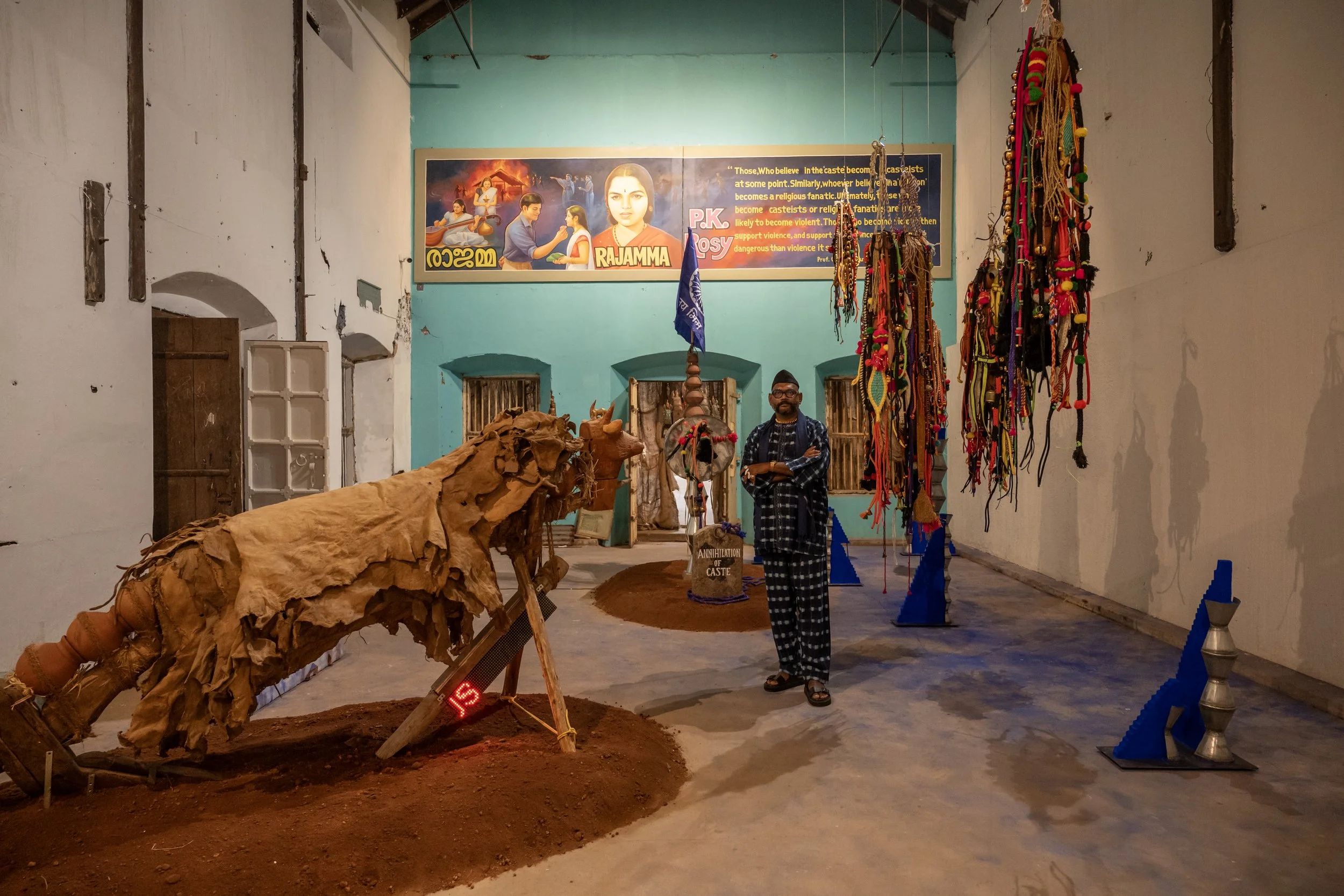
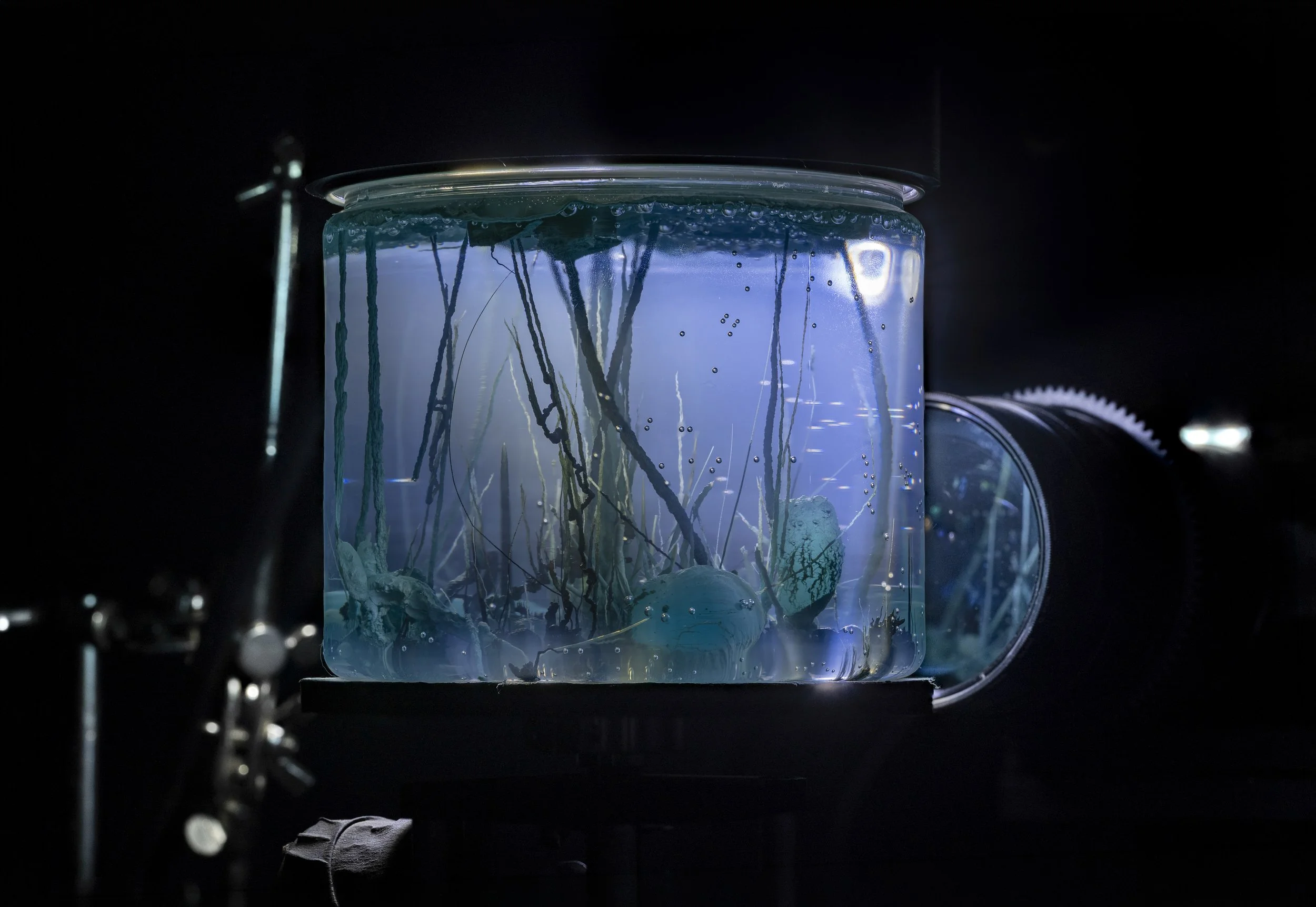
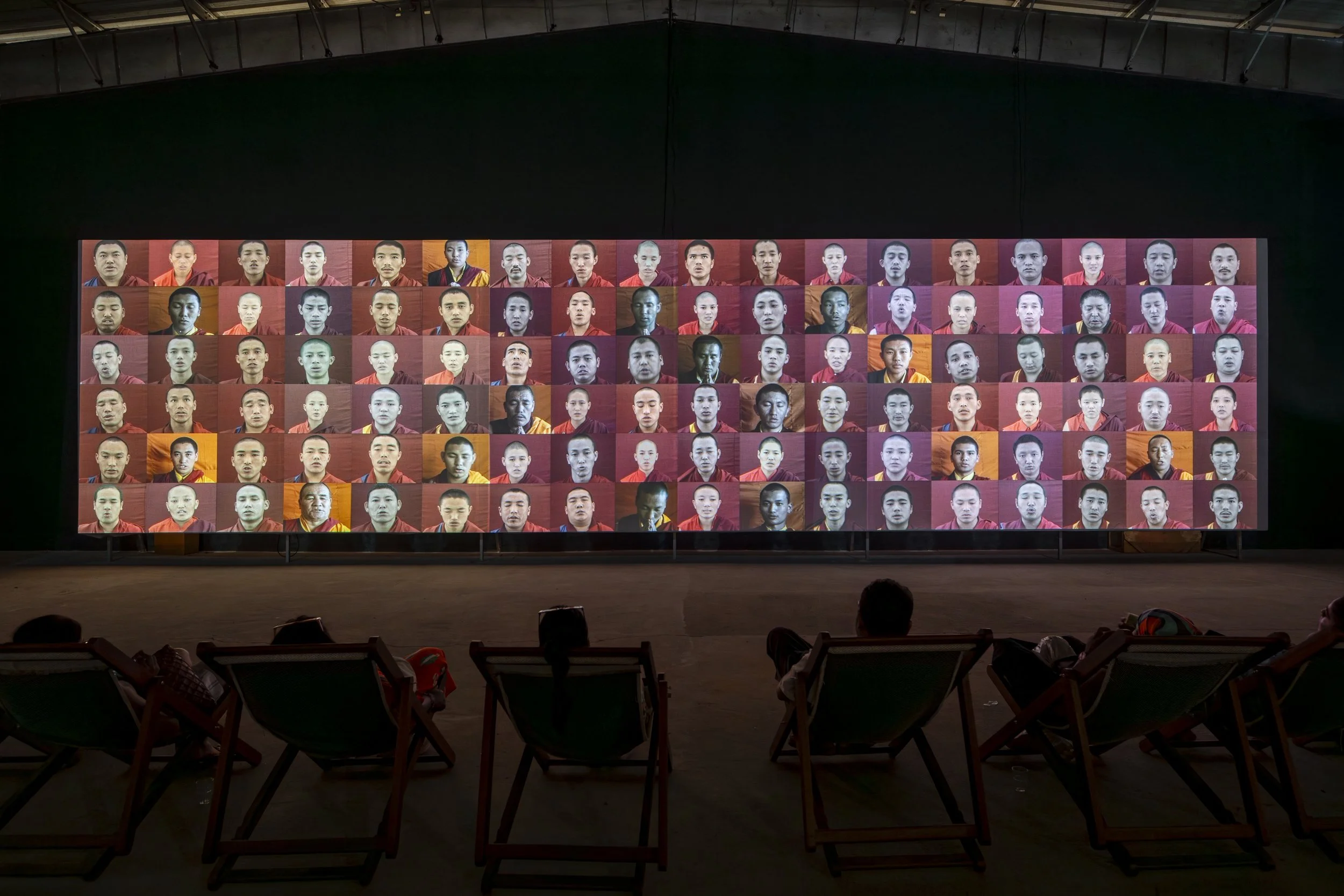
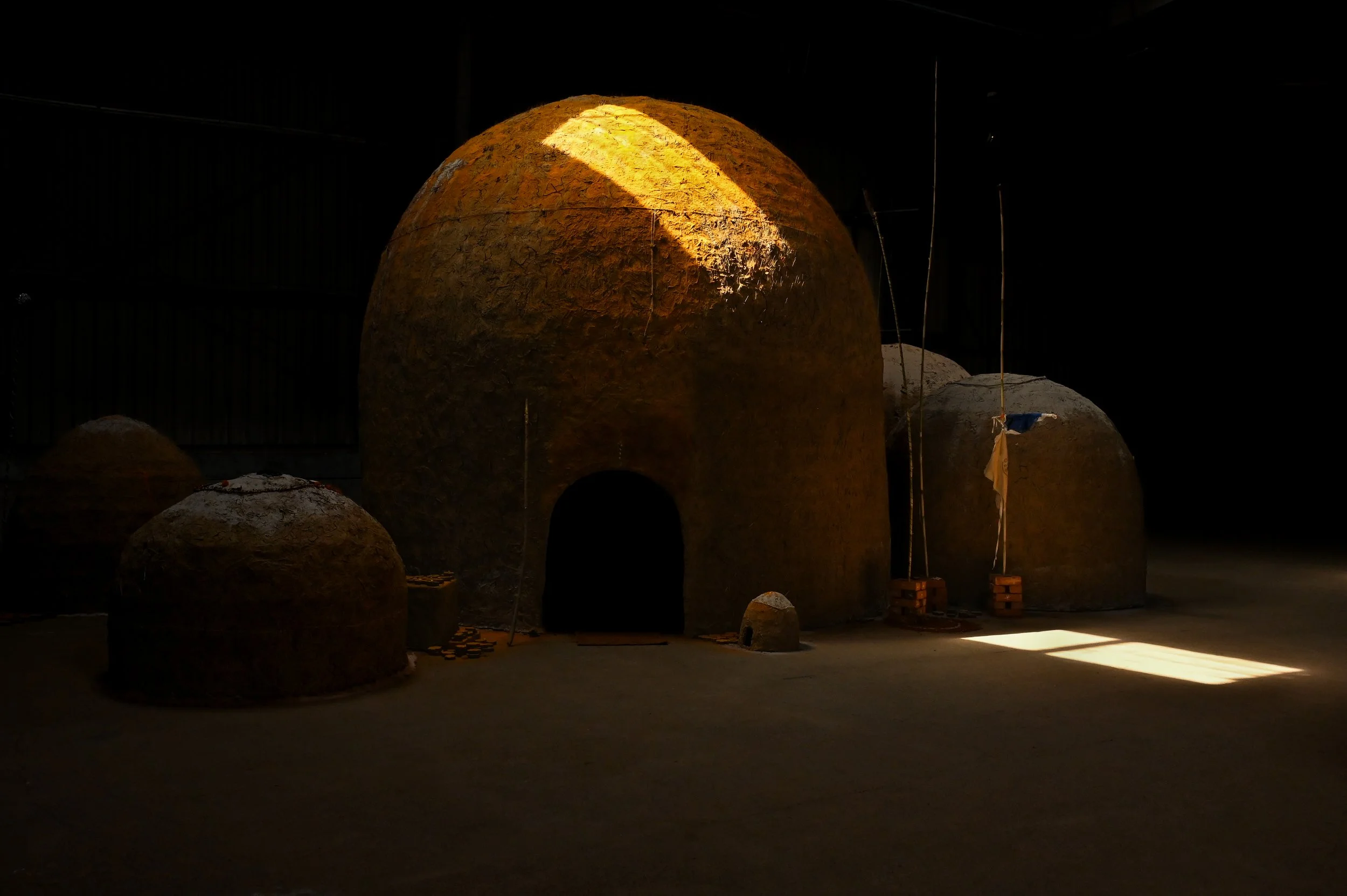
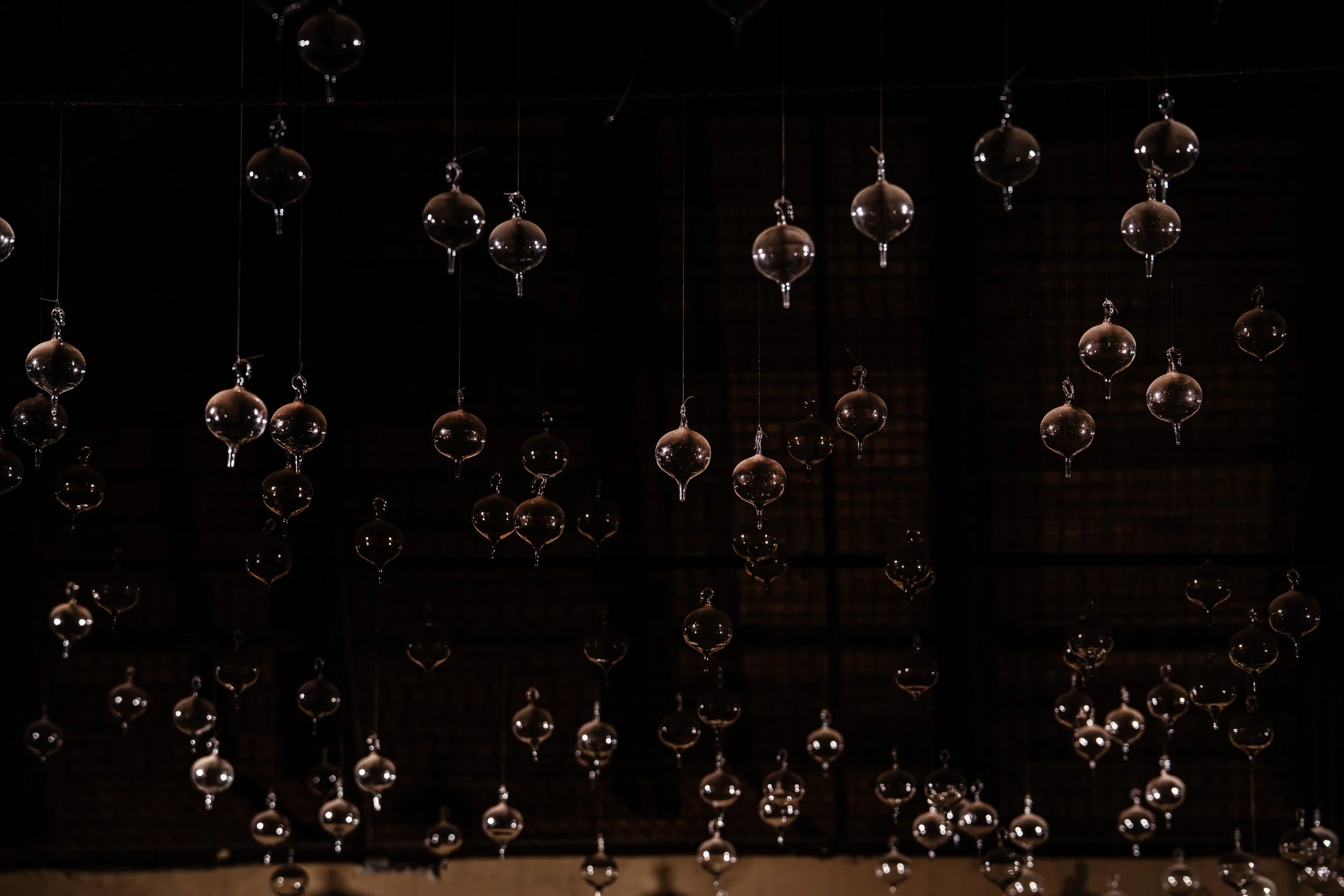
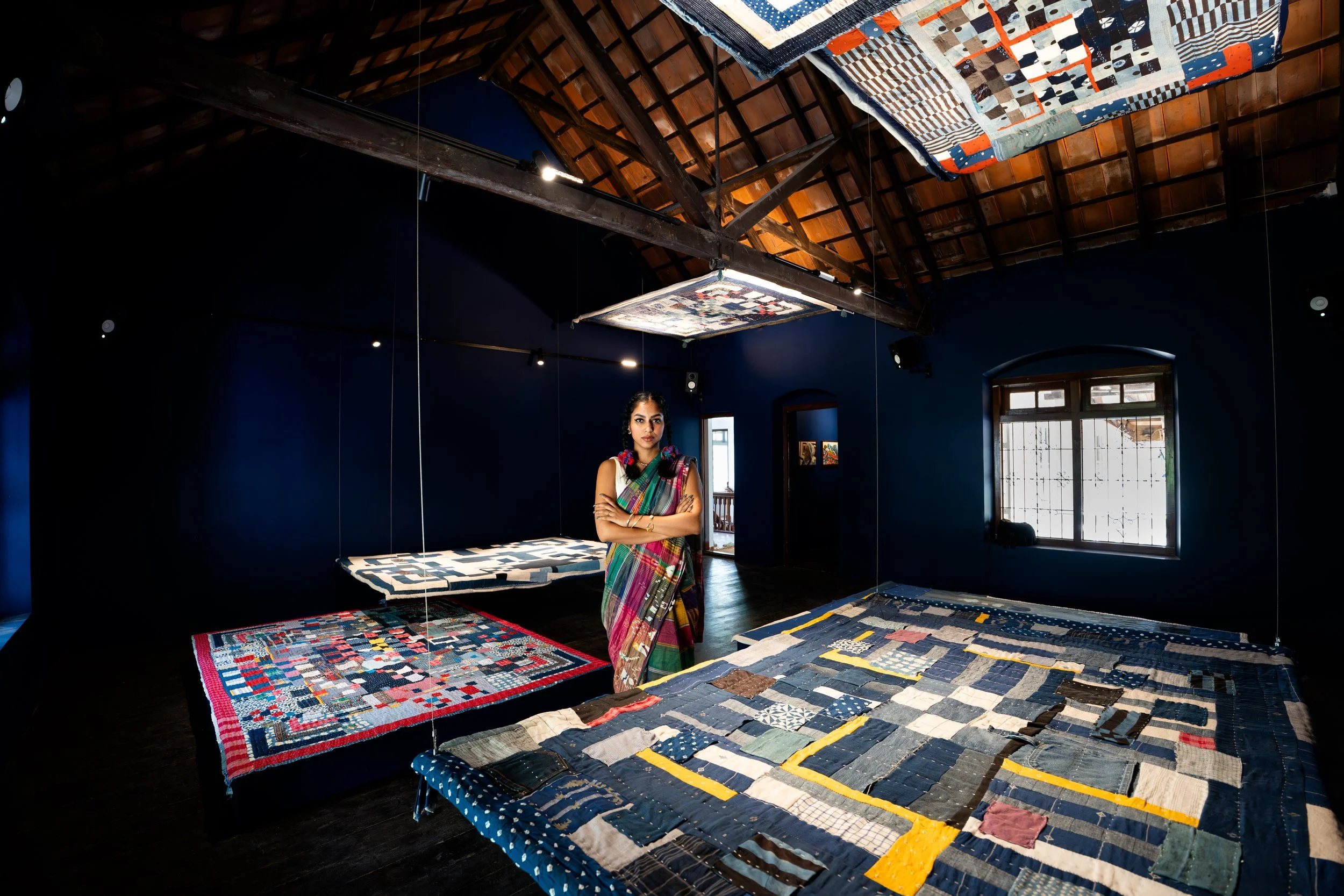
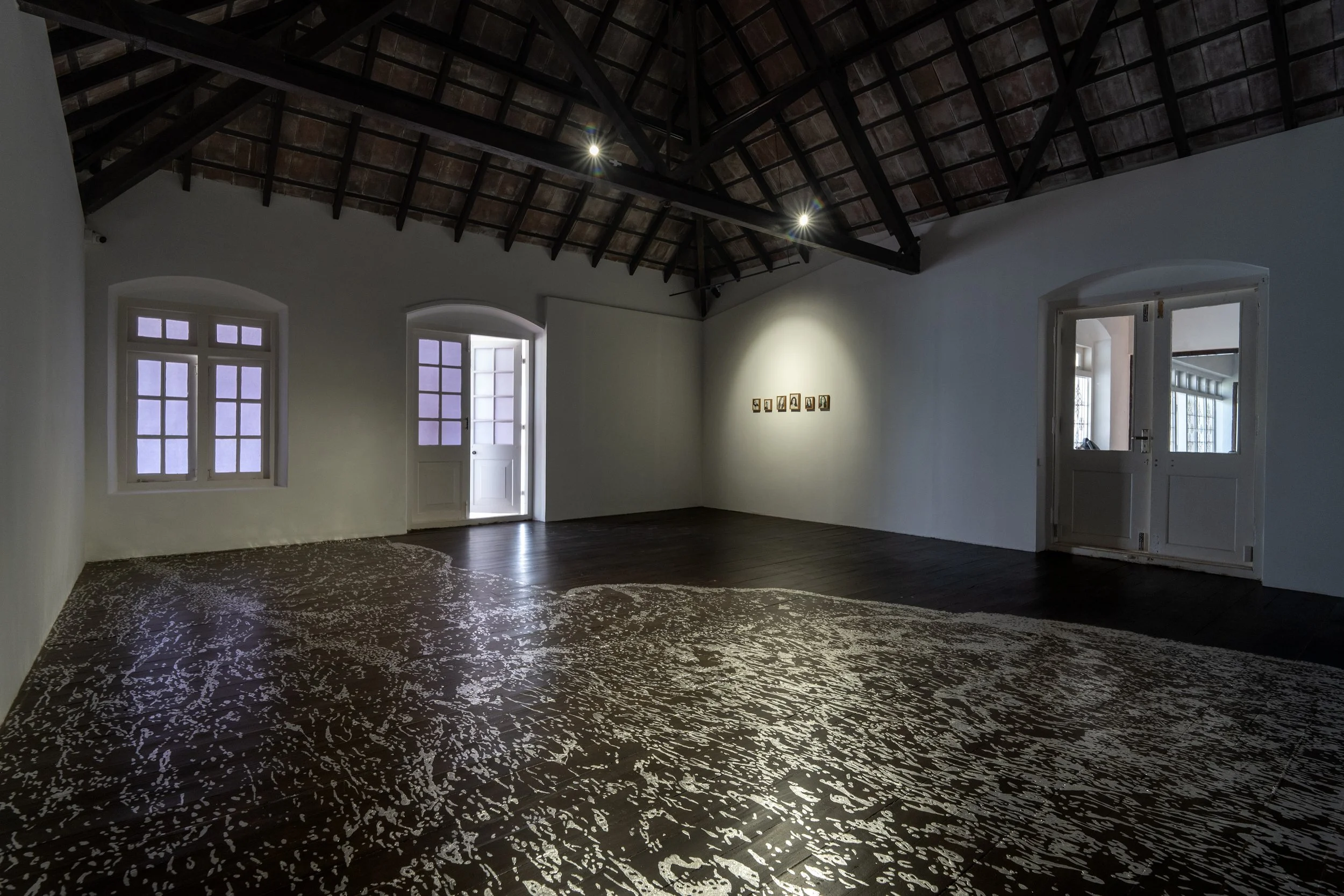
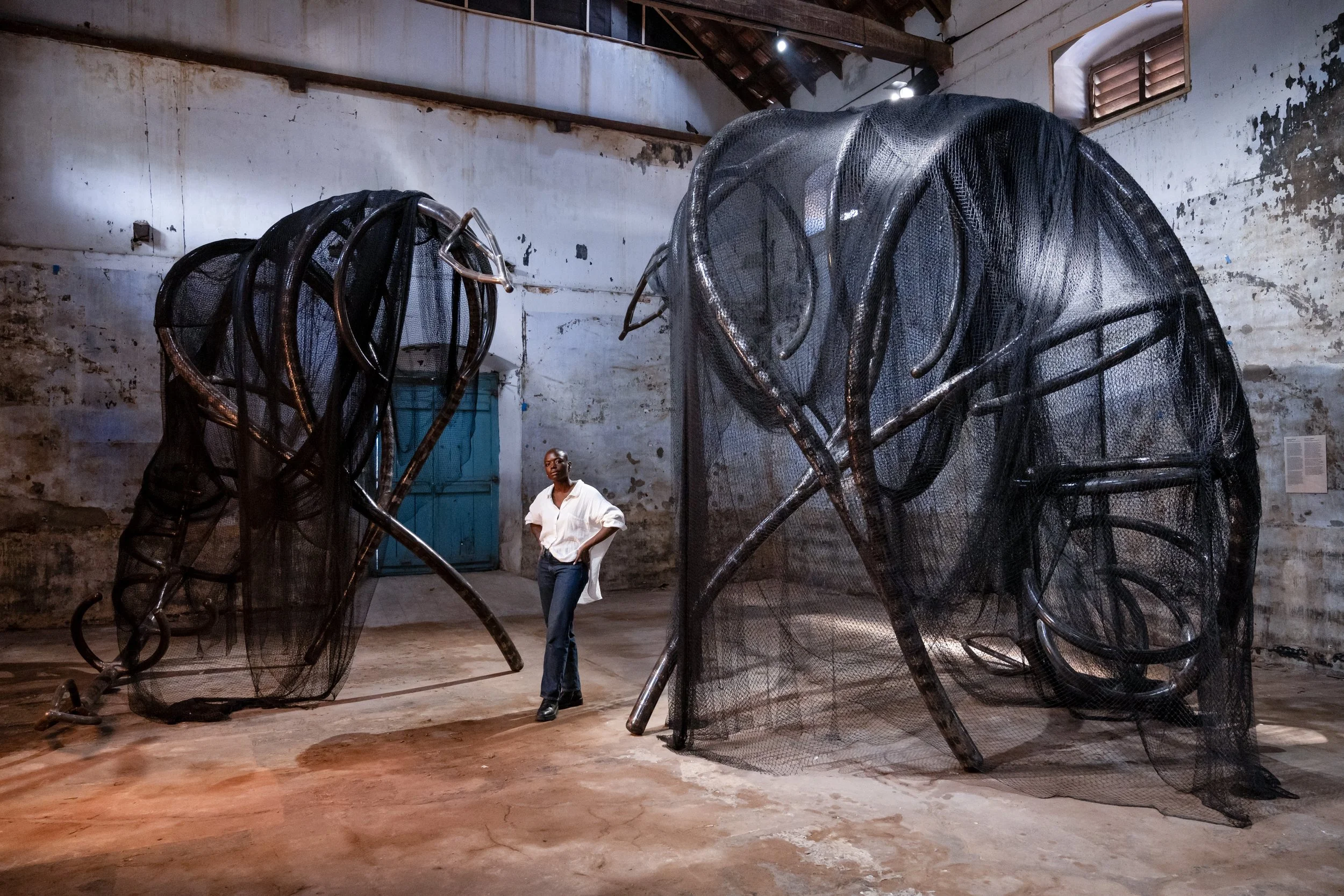
The exhibition spanned Fort Kochi, Mattancherry, and Willingdon Island in old and new warehouses. Some of these spaces were familiar to the Biennale from past iterations, while some of them were new spaces that we crossed the river for. Flowing through these conditions, we offered our bodies and time to this possibility of making and imagining an exhibition that is beyond and against its established contours.